

Table of Contents
- What Makes a Maze Work as Brain Training
- Maze Puzzle Books for Adults: What Separates a Good One From a Bad One
- Challenging Mazes for Adults: Calibrating Difficulty to Your Experience
- Printable Maze Worksheets for Adults: The Flexible Option
- Daily Maze Puzzles: Building a Routine That Sticks
- What the Research Actually Says About Mazes and Brain Training
- Common Mistakes Adults Make When Choosing Maze Books
- Reader Resources
- Conclusion: Picking the Right Maze for Your Goal
- Frequently Asked Questions
Last Updated: October 12, 2026
What Makes a Maze Work as Brain Training
The best mazes for adult brain training work when they force the solver to hold a goal in mind while scanning, planning, and correcting course. That combination is what separates a real mental workout from a casual doodle.
Researchers have studied whether this kind of puzzle play sharpens thinking. A study published in "Brain Training Games Enhance Cognitive Function in Healthy Adults" followed healthy adults and found that puzzle play may support cognitive function and help soften some effects of aging. The same authors were careful to say more research is needed.
That caution matters. The Stanford Center on Longevity consensus on the brain training industry warns that marketing claims often outrun the evidence. Cognitive training tends to improve the tasks you practice, and broad claims about everyday intelligence deserve skepticism.
So what does a maze actually train? Three things, mostly:
- Visual tracking: following a path without losing your place
- Spatial reasoning: picturing where a corridor leads before you draw it
- Planning: choosing a route and adjusting when it dead-ends
This guide from Jove Publishing walks through how to pick maze puzzle books for adults, how to match difficulty to your experience, and how to build a routine that lasts. Below, we break down what separates a good maze book from a frustrating one, plus the mistakes that waste money.
Maze Puzzle Books for Adults: What Separates a Good One From a Bad One
A good maze puzzle book for adults gets four things right: print size, paper quality, difficulty range, and a complete answer key. Miss any one of those and the book sits on a shelf.
Most buyers focus on the cover. That is backwards. The details that decide whether you finish the book are physical and structural, not artistic.
Paper Quality, Print Size, and the Small Details That Matter
Thin paper ruins a maze book fast. Pencil pressure, erasing, and ink bleed all show through to the puzzle on the reverse side. Look for pages with enough weight that a pencil mark stays put, and check whether puzzles print on one side only.
Print size is the other quiet dealbreaker. Large print maze books help readers who wear glasses, solve in low light, or simply get tired of squinting. A tight, cramped grid turns a relaxing puzzle into a chore.
Three quick checks before buying:
- Flip to a middle page and look for show-through
- Confirm the grid lines are dark and clear, not faint gray
- Check that wider paths and larger cells are used in the easier sections
Answer Keys, Puzzle Count, and Value
An answer key is not a crutch. It is a progress tool. When a maze wins, the solution page shows where the path actually ran, which teaches more than staring at a dead end for twenty minutes.
Puzzle count matters too, but not the way most shoppers think. A book with 200 rushed mazes is worth less than one with 60 well-built ones. Density beats volume.
A Transparent Side-by-Side Comparison of Maze Book Types
Most maze roundups are product listings dressed up as reviews. We would rather show you the trade-offs directly. The table below compares the maze book formats you are most likely to encounter, judged on the criteria that actually affect whether you finish the book.
| Format | Typical Puzzle Count | Difficulty Range | Print Size | Answer Key | Best For |
|---|---|---|---|---|---|
| Large-print maze book | 50-100 | Easy to moderate | Large, dark grid lines | Usually complete | Low vision, seniors, low-light solving |
| Standard adult maze book | 60-120 | Moderate to hard | Standard | Usually complete | Daily habit, short breaks |
| Ultra-hard maze collection | 40-80 | Hard to ultra-hard | Standard, dense grids | Sometimes partial | Experienced solvers wanting a challenge |
| Printable maze worksheets | Unlimited (reprintable) | Varies by source | You control scale | Varies | Trying a level, travel, group nights |
| Themed maze book (travel, holiday) | 30-60 | Easy to moderate | Standard | Usually complete | Gifting, seasonal solving |
A few notes on reading that table honestly:
- Puzzle count is not quality. A 120-maze book with faint lines and no answer key is worse than a 60-maze book with clear grids and full solutions.
- Difficulty range is the single best predictor of whether you finish. A book that spans easy to ultra-hard lets you climb rungs without buying again.
- Print size is not just for seniors. Anyone who solves in the evening, wears reading glasses, or uses a lamp that is not ideal benefits from larger grids.
- Answer keys vary more than the labels suggest. "Solutions included" sometimes means a handful of sample answers, not a full key. Check the product description or a preview page.
How to Choose Based on Your Goal
Different solvers want different things from the same hobby. Match the book to the goal, not the cover:
- Short daily break (5-15 minutes): a standard adult maze book with a moderate difficulty range and a full answer key.
- Sustained challenge (one long sitting): an ultra-hard collection with large grids and deceptive loops.
- Low-vision or limited dexterity: a large-print maze book with dark lines, wide paths, and generous writing space.
- Trying before committing: printable maze worksheets, which let you test a difficulty level before buying a bound book.
- Gifting or family activity: a themed maze book or a printable set that can be reprinted for multiple solvers.
Accessibility and Usability Details Worth Checking
A maze book can be well-made and still be hard to use. Before buying, check:
- Line contrast: dark, high-contrast grid lines are easier to follow than faint gray ones, especially under warm indoor lighting.
- Page size: larger pages allow bigger cells and more writing room; smaller pages are more portable but can feel cramped.
- Writing space: paths wide enough for a pencil tip matter more than they sound, particularly for solvers with limited dexterity.
- Visual complexity: dense, high-dead-end grids are harder on the eyes than open layouts, even at the same difficulty label.
- Binding: lay-flat or spiral binding helps if you solve at a desk; perfect binding is fine for casual solving but harder to keep open.
None of these details show up in a typical product listing. They are also the ones that decide whether the book gets finished.
Challenging Mazes for Adults: Calibrating Difficulty to Your Experience
Challenging mazes for adults should feel hard but solvable within a sitting. If a puzzle takes three sessions and still wins, the difficulty is miscalibrated for that solver.
Difficulty in mazes comes from a few levers: path width, dead-end density, grid size, and how many false routes loop back on themselves. A book that only offers one setting gets boring fast or frustrating fast, depending on which side of the line it lands.
A Difficulty Ladder From First-Timer to Ultra-Hard
Think of maze difficulty as a ladder. Start where you can finish, then climb.
- Easy mazes: wide paths, few dead ends, finish in a few minutes
- Moderate: narrower paths, more branches, good for a short break
- Hard-level puzzles: dense dead ends, longer solve times, real focus required
- Ultra-hard mazes: large grids, deceptive loops, best tackled in one quiet sitting
A Practical Difficulty Rubric You Can Apply to Any Book
Labels like "hard" and "ultra-hard" are not standardized across publishers. Two books can use the same word for very different puzzles. Here is a rubric you can apply yourself, using features you can see in a preview page:
| Level | Grid Size | Path Width | Dead-End Density | Typical Solve Time |
|---|---|---|---|---|
| Easy | Small (roughly 10x10 to 15x15) | Wide, easy to trace | Low, few branches | 2-5 minutes |
| Moderate | Medium (roughly 15x20 to 20x25) | Comfortable | Moderate, some loops | 5-12 minutes |
| Hard | Large (roughly 20x30 to 30x40) | Narrower | High, many false routes | 12-25 minutes |
| Ultra-hard | Very large (30x40 and up) | Tight | Very high, deceptive loops | 25-60+ minutes |
These ranges are practical guides, not rules. A small grid with unusually dense dead ends can play harder than a larger grid with open corridors. Use the rubric as a starting point, then adjust based on how the first few puzzles actually feel.
Recommendations by Experience Level
- First-timer or returning after years away: start with easy and moderate mazes. Finish several before moving up. The goal is momentum, not difficulty.
- Casual solver with a daily habit: a book spanning moderate to hard keeps the routine interesting without stalling you.
- Experienced solver: hard to ultra-hard collections with large grids and deceptive loops. Look for books that label their difficulty consistently rather than using one word for everything.
- Solver with low vision or limited dexterity: prioritize large-print books with wide paths and dark lines, even if the difficulty label sounds modest. Usability beats bragging rights.
Matching Difficulty to Your Goal
Difficulty is not a single dial. It depends on what you want from the session:
- A short mental break: moderate mazes, 5-12 minutes, one puzzle per sitting.
- A focused challenge: hard-level puzzles, 12-25 minutes, solved without interruption.
- A weekend project: one ultra-hard maze, solved in a single quiet sitting.
- A shared activity: easy to moderate mazes printed at a larger size, so two solvers can work side by side.
The goal is not to beat the hardest maze in the book. It is to stay in the zone where the puzzle stretches you without stalling you.
Printable Maze Worksheets for Adults: The Flexible Option
Printable maze worksheets for adults solve the two biggest problems with books: you can print only what you want, and you can reprint a puzzle you enjoyed.
Printables also let you scale. Print a page at a larger size for easier reading, or print the same maze twice and race a friend. That flexibility is hard to match with a bound book.
Where printables fall short is durability and feel. Loose sheets scatter, and standard printer paper is thinner than a good book page. A clipboard or a three-ring binder fixes most of that.
Printable maze worksheets for adults work best for:
- Trying a difficulty level before buying a full book
- Travel, where tearing out a page beats carrying a volume
- Group or family activity nights
- Building a daily habit without committing to a collection
Daily Maze Puzzles: Building a Routine That Sticks
Daily maze puzzles work best as a short, fixed block of time, usually five to fifteen minutes, tied to something you already do. Habit stacking beats willpower.
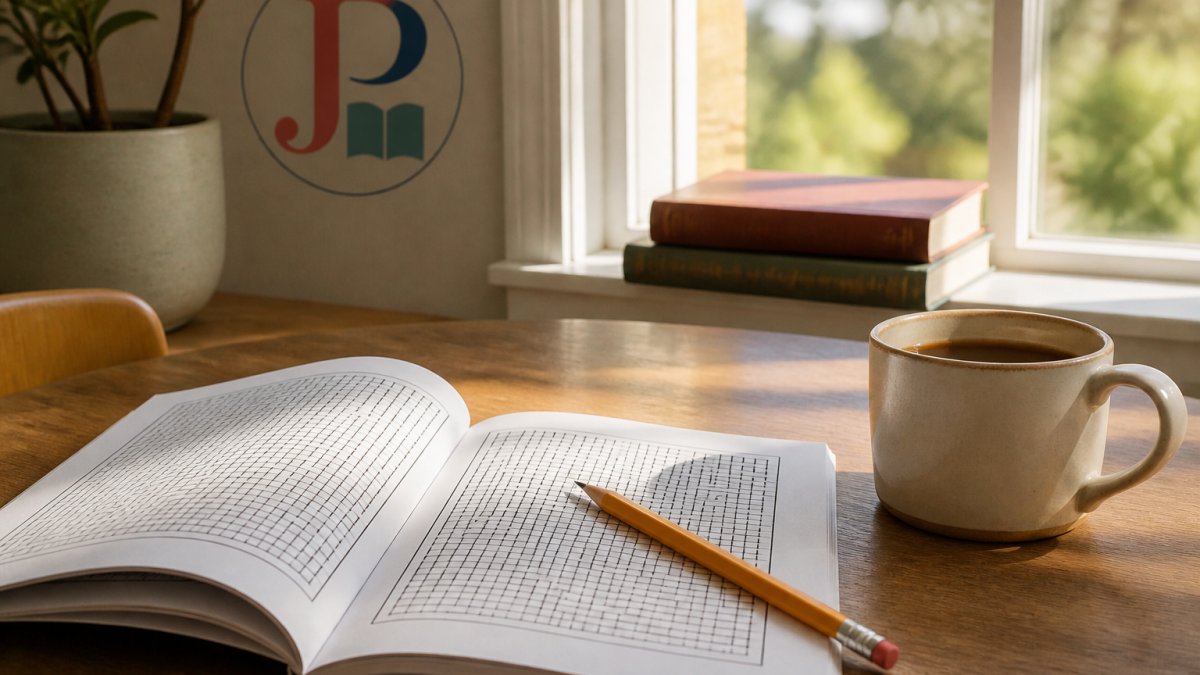
The routine does not need to be long. A single moderate maze with coffee, or one hard-level puzzle before bed, is enough to make the habit stick. What matters is consistency, not duration.
A simple weekly rhythm:
- Monday to Friday: one maze per day, same time, same chair
- Weekend: one longer ultra-hard maze as a treat
- Monthly: revisit an old puzzle and time yourself
Tracking progress helps more than people expect. Note the date, the difficulty level, and whether you finished without checking the answer key. Over a few weeks, the pattern shows whether to move up a level or stay put.
What the Research Actually Says About Mazes and Brain Training
The honest answer is that mazes are a solid mental exercise, but the evidence for broad cognitive gains is mixed and often oversold.
The study on brain training games and cognitive function found that puzzle play may improve cognitive function and help reduce some effects of aging in healthy adults. The authors flagged that further research is needed, which is a fair and important caveat.
The Stanford Center on Longevity consensus statement goes further. It states that cognitive training produces reliable improvements on the tasks practiced, but that those gains do not necessarily transfer to broad, real-world benefits.
What does that mean for maze solvers? Practice mazes and you get better at mazes, plus the focus and patience that come with any sustained mental exercise. Treat any claim of a full cognitive overhaul with a raised eyebrow.
Common Mistakes Adults Make When Choosing Maze Books
The biggest mistake is buying on difficulty alone. A book labeled ultra-hard sounds impressive and often ends up abandoned by week two.
Other frequent missteps:
- Ignoring print size: small grids and faint lines cause eye strain and quitting
- Skipping the answer key check: some books bury solutions or omit them entirely
- Chasing puzzle count: 300 thin mazes beat nothing, but 60 good ones beat 300
- Mixing formats badly: buying printables and a book at once splits focus
- No difficulty range: a single-level book runs out of runway fast
A smarter approach is to start with a book that spans easy to ultra-hard. That way the same purchase supports months of progress, and the solver can move up a rung whenever a level starts to feel routine.
Reader Resources
For readers who want to pair puzzle time with a screen break and a good story, Misty Clover Press publishes maze books, word searches, crosswords, and coloring titles built for adults who want to unwind. The imprint's puzzle and activity books pair well with a daily maze routine.
A free starting point is available: the FREE Printable Activity Sampler by Misty Clover Press offers a taste of the puzzle and coloring lineup before committing to a full book. More titles live at mistycloverpress.com.
Conclusion: Picking the Right Maze for Your Goal
Choosing the best mazes for adult brain training comes down to matching the format and difficulty to what you actually want. For a daily habit, a book with a wide difficulty range and large print wins. For flexibility, printables win. For a real challenge, ultra-hard mazes in a well-made book are the pick.
The trap is buying for the shelf instead of the routine. Start one rung below where your ego says you belong, finish a few puzzles, and climb from there.
Jove Publishing carries puzzle and activity titles from Misty Clover Press alongside fiction, so readers can build a full screen-break stack in one place. Browse the collection and pick a maze book that fits the level you are actually at.
Frequently Asked Questions
Are doing mazes good for your brain?
Mazes engage focus, concentration, spatial reasoning, and planning, which is why they are often grouped with brain training activities. A 2018 study by A. Al-Thaqib and colleagues found that brain-training games may improve cognitive function and help reduce effects of aging in adults, though the authors noted more research is needed. The Stanford Center on Longevity cautions that improvements tend to stay close to the trained task. Mazes for adults are a worthwhile mental exercise, but treat them as one part of a broader routine rather than a cure-all.
Are maze puzzle books better than online maze games?
It depends on your goal. Maze puzzle books for adults offer a screen break, work anywhere without a device, and give you a physical record of progress you can flip back through. Online maze games are convenient and often free, but notifications and tab-switching can interrupt the sustained attention that makes mazes useful. If your aim is relaxation and focus, a paperback maze book tends to support that better. If you want quick variety, printable maze worksheets for adults split the difference nicely.
How difficult should a maze be for an adult beginner?
Start with easy mazes that take five to ten minutes to solve. If you finish without backtracking more than a couple of times, move up a level. The sweet spot for brain training is a maze that takes real effort but does not leave you frustrated. Many maze puzzle books for adults label difficulty levels, which makes this easier. Give yourself two or three weeks at each level before jumping to challenging mazes for adults.
How often should adults do maze puzzles?
A short daily session works better than one long weekend marathon. Ten to fifteen minutes of daily maze puzzles is enough to build a habit and give your attention a focused workout. Keep a pencil and book somewhere visible, like a coffee table or nightstand, so starting is easy. If you miss a day, just pick it back up. Consistency matters more than volume, especially when you are using mazes as a short break from screens.
Most solvers quit maze books because the first one they bought was too hard, too small, or missing an answer key. Jove Publishing helps readers avoid that dead end with curated puzzle and activity titles from Misty Clover Press, including maze books built for adult solvers, large print options, and complete answer keys. Continue shopping at the Jove Publishing store to find a maze book that matches your level, and grab the free printable activity sampler to test a few puzzles first.