

Table of Contents
- What Separates a High Quality Puzzle Book From a Cheap One
- How to Evaluate Puzzle Variety and Challenge Level
- Why Answer Keys and Solvability Decide Everything
- Print Quality, Paper, and Binding: What to Check in Person and Online
- Best Puzzle Books for Adults: Matching the Book to the Reader
- Large Print Puzzle Books: What the Label Should Tell You
- Logic Puzzle Books for Adults: Grids, Deduction, and Real Difficulty
- Word Search Books for Adults: Hidden Words, Hidden Problems
- Replay Value and Organization: Books You Can Return To
- How to Find High Quality Puzzle Books Without Wasting Money
- Common Mistakes Buyers Make With Puzzle Books
- Reader Resources
- Conclusion
- Frequently Asked Questions
Last Updated: October 7, 2026
What Separates a High Quality Puzzle Book From a Cheap One
Learning how to find high quality puzzle books comes down to a handful of details most shoppers never check: answer key accuracy, paper weight, grid clarity, and whether the difficulty labels mean anything. This guide from Jove Publishing walks through each one, because the difference between a puzzle book that lasts a year and one that goes in the recycling bin is rarely the cover.
The puzzle and activity category keeps growing, and the jigsaw puzzle market alone is projected to reach roughly USD 2.42 billion in 2026, according to Coherent Market Insights' jigsaw puzzle market forecast. That kind of demand attracts rushed products. A cheap puzzle book usually reveals itself in the first ten minutes: faint grids, a missing answer, a word search where the hidden word simply is not there.
Below, we break down the exact checks that separate a well-made puzzle book from a disposable one, plus what to look for in large print, logic, and word search titles.
The Four Things You Can Judge Before You Buy
Four signals tell you most of what you need to know before money changes hands:
- The answer key. A complete, clearly numbered key in the back signals the publisher finished the job.
- The difficulty labeling. Books that mark each puzzle easy, medium, or hard respect the solver's time.
- The page count versus puzzle count. A 130-page book with 100 crosswords tells you the layout is generous, not cramped.
- The publisher's name. Independent imprints like Misty Clover Press focus on production quality.
How to Evaluate Puzzle Variety and Challenge Level
Variety and challenge level are the two features that determine whether a puzzle book holds attention past the first sitting. A book with one difficulty and one puzzle type gets old fast, no matter how well it is printed.
The best puzzle books for adults mix formats and difficulty within a single volume. A crossword collection that runs easy, medium, then hard lets a solver warm up and then stretch. A word search book that varies word length and direction keeps the search genuinely challenging rather than mechanical.
Look at how the puzzles are sequenced. Strong publishers group by difficulty or mark each puzzle clearly, so a reader can choose a five-minute warm-up or a full evening challenge. Weak books dump everything in random order and leave the solver guessing.
Reading a Difficulty Label That Actually Means Something
Difficulty labels only help if the publisher defines them. "Challenging" on one book might mean a Tuesday-morning crossword; on another it means a themeless grid with obscure references.
A useful label tells you what kind of effort is required. Easy usually means common vocabulary and straightforward clues. Medium introduces wordplay, puns, and misdirection. Hard assumes comfort with trivia, alternate meanings, and tighter grids. When a book marks each puzzle individually and includes a note on how difficulty was assigned, that is a publisher thinking about the solver.
If a listing says nothing about difficulty, treat it as a warning sign rather than a neutral detail. You will not know what you are buying until it arrives.
Why Answer Keys and Solvability Decide Everything
Answer keys and solvability are the foundation of a trustworthy puzzle book, and they are the first thing to verify. A puzzle that cannot be solved as written is not a puzzle, it is an error, and one bad grid undermines confidence in every other page.
Here is what to check:
- Completeness. Every puzzle should have a matching answer. Count them.
- Numbering. The answer for puzzle 47 should be labeled 47, not buried in an unlabeled block.
- Legibility. A blurry or tiny answer key defeats the purpose.
- Accuracy. Spot-check two or three answers against the puzzles. If one is wrong, assume others are too.
A common mistake is assuming a mainstream publisher guarantees accuracy. It does not. Errors slip through in every tier of the market, which is why the answer key is worth thirty seconds of your time before purchase.
Print Quality, Paper, and Binding: What to Check in Person and Online
Print quality is where cheap puzzle books give themselves away, and it is the hardest thing to judge from a product photo. Paper weight, ink darkness, grid size, and binding all affect how pleasant the book is to actually use.
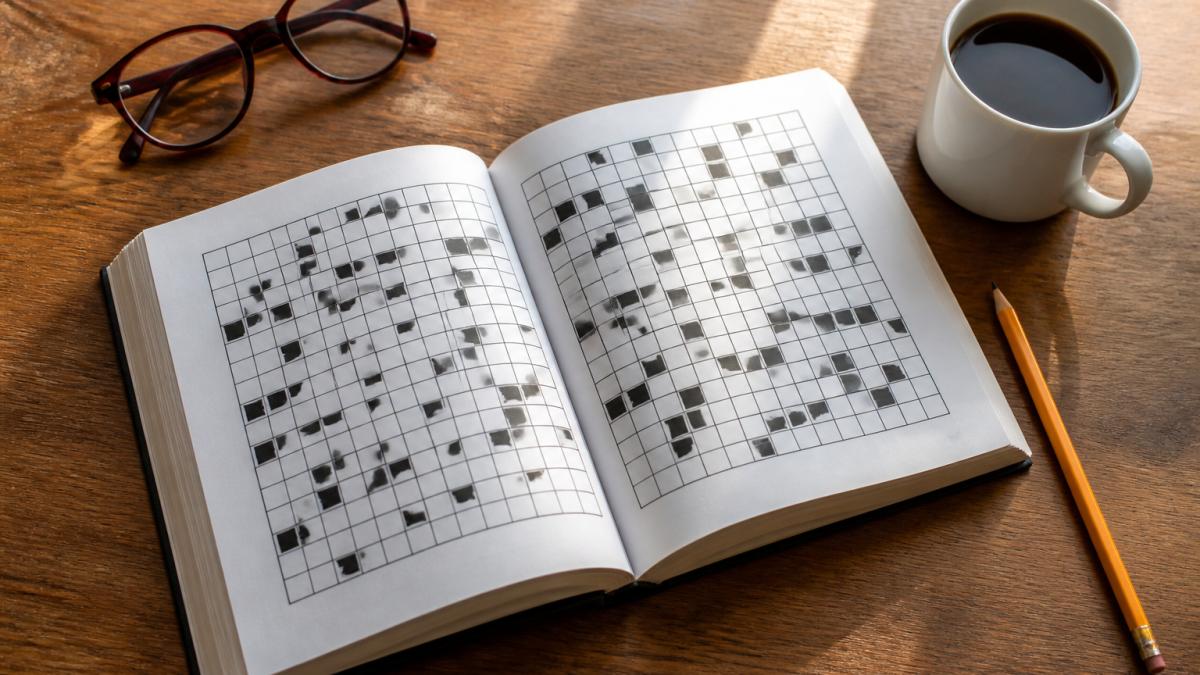
In person, run your thumb across a page. Thin, see-through paper lets the answer key bleed through from the back and makes pencil marks smudge. Good puzzle books use paper heavy enough to take erasing without tearing. The grid lines should be dark and even, not faded at the edges of the page.
Online, you have fewer signals, but they still exist. Look for product listings that state page count, dimensions, and item weight, because those numbers tell you how substantial the book is. A book listed at 8.5 by 11 inches with a reasonable page count and a stated weight is doing more to inform you than a listing with a single glossy photo and no specifications.
Binding matters too. A puzzle book that will not lie flat fights you every time you work a grid. Paperback binding is standard and fine, but a book with a stiff spine that cracks on the second open is a book you will stop using.
Best Puzzle Books for Adults: Matching the Book to the Reader
The best puzzle books for adults match the reader's habits, not a generic difficulty rating. A commuter who solves for ten minutes needs short, self-contained puzzles. A weekend solver who settles in for an hour wants a longer, more involved grid.
Cozy Christmas & Winter - Crosswords →
Match the format to the situation:
| Reader | Best Format | Why It Fits |
|---|---|---|
| Short daily breaks | Word searches, quick crosswords | Solvable in 10-15 minutes |
| Evening wind-down | Large print crosswords | Comfortable on the eyes, low pressure |
| Weekend deep dive | Logic grids, themeless crosswords | Rewards sustained focus |
| Group or family | Mixed activity books | Varied formats suit different skill levels |
| Gifting | Seasonal themed collections | Clear theme makes the choice easy |
A thoughtful publisher will label books by audience and use case rather than pitching every title at everyone. That is the difference between a catalog and a pile of books.

Large Print Puzzle Books: What the Label Should Tell You
Large print puzzle books should state their font size and grid dimensions, not just carry a "large print" sticker. The label means little without specifics, and readers who need larger type deserve to know exactly what they are getting.
Real large print means bigger grid squares, bolder clue text, and more white space between lines. It does not mean the same small grid printed on a slightly larger page. When shopping, look for listings that mention font size or grid size, and check the stated page dimensions. A book measuring 8.5 by 11 inches has room for genuinely readable grids; a smaller trim size usually does not.
Large print titles also tend to be easier on the eyes for long sessions, which makes them a strong choice for older solvers or anyone who reads in lower light. Pairing large print with a difficulty range that starts easy and builds is the most forgiving combination for a reader new to a puzzle type.
Logic Puzzle Books for Adults: Grids, Deduction, and Real Difficulty
Logic puzzle books for adults live or die on the quality of their grids and the soundness of their deductions. A logic puzzle is only as good as its solution path, and a poorly constructed grid either has multiple solutions or none at all.
Good logic puzzle books give you a clean grid, a clear set of clues, and enough space to mark deductions. The clues should be sufficient to reach exactly one solution through reasoning, not guesswork. When a puzzle requires you to assume an answer and check it, the construction is weak.
Difficulty in logic puzzles comes from the number of categories and the indirectness of the clues, not from trickery or missing information. A well-built hard puzzle is satisfying because every step is earned. A badly built one is frustrating because the logic does not hold.
Look for books that explain their notation, provide a worked example, and include complete solutions. These three features separate a teaching book from a puzzle dump.
Word Search Books for Adults: Hidden Words, Hidden Problems
Word search books for adults should hide words in every direction, including backward and diagonal, and they should say so. A word search that only runs words left to right is a beginner's book, and it should be labeled as one.
The hidden problems in cheap word search books are predictable. Words get printed in the answer key but never appear in the grid. Letter counts do not match. Themes are inconsistent, with a "winter" puzzle that includes summer words. These errors are easy to catch with a quick spot-check.
Quality word search books also think about the solving experience. Themed word lists give the search context and make it more enjoyable. Clear, evenly spaced letters reduce eye strain. A book that pairs each puzzle with a short message or theme, like the seasonal titles from Misty Clover Press, adds a small reason to keep going.

For adult solvers, look for books that specify word direction, list the number of words per puzzle, and include a full answer key. Those three details tell you the publisher thought about the person holding the pencil.
Replay Value and Organization: Books You Can Return To
Replay value and organization determine whether a puzzle book earns shelf space or gets passed along after one pass. A book you can return to months later is worth more than one you finish and forget.
Organization is the practical side. Numbered pages, a table of contents, and difficulty groupings make a book easy to navigate. When you want a quick puzzle, you should be able to find one without flipping through the whole book. Clear structure also makes a book easier to share or gift, since the next reader can find their footing fast.
Replay value is subtler. Puzzles you solve in pencil can be erased and revisited. Books with a range of difficulty reward a second pass, because the hard puzzles you skipped the first time are still waiting. Themed seasonal books, like a winter crossword collection, naturally invite a return visit when the season comes around again.
How to Find High Quality Puzzle Books Without Wasting Money
Finding high quality puzzle books without wasting money comes down to checking a short list of features before you buy, whether you are in a store or reading a product listing online. The checks take two minutes and save the cost of a disappointing book.
Start with the answer key. Confirm it is complete, correctly numbered, and legible. Then check the difficulty labeling and the puzzle variety. Look at the stated page count, dimensions, and weight to judge paper quality. Read the description for word direction, font size, or grid size.
Cozy Christmas & Winter - Crosswords →
A Quick Pre-Purchase Checklist
- Answer key present, complete, and correctly numbered
- Difficulty labeled per puzzle or clearly grouped
- More than one puzzle type or difficulty level
- Page count and dimensions stated in the listing
- Word direction or font size specified where relevant
- Publisher named and identifiable
- Sample pages or a look-inside preview available
- Spot-checked at least two answers for accuracy
A book that passes all eight is a safe buy. One that fails three or more is a gamble.
Common Mistakes Buyers Make With Puzzle Books
The most common mistakes buyers make with puzzle books are skipping the answer key, trusting a difficulty label at face value, and buying for themselves when the book is a gift. Each one leads to the same outcome: a book that sits unfinished.
Buying on cover appeal alone is another frequent error. A striking cover says nothing about grid quality or paper weight. So is assuming a low page count means fewer puzzles, when it often means smaller type and tighter grids instead.
Gift buyers make a specific mistake: choosing a difficulty that matches their own skill rather than the recipient's. A hard logic puzzle book given to a casual solver is a book that never gets opened. Match the book to the person, and when in doubt, choose a range that starts easy.
Finally, buyers overlook the publisher. An identifiable publisher with a catalog and a reputation has more reason to get the details right than an anonymous listing. That is why we at Jove Publishing, through our Misty Clover Press imprint, publish puzzle and activity books with clearly marked difficulty, complete answer keys, and stated specifications, so readers know what they are getting before it arrives.
Reader Resources
Readers who want to test the waters before committing to a full puzzle book can start with a free sample. The FREE Printable Activity Sampler by Misty Clover Press offers puzzles, brain training pages, coloring pages, word searches, mazes, and creative activities in a printable format, which makes it easy to try a range of formats and find the one that fits.
More puzzle and activity books, including seasonal crossword and word search titles, are available through https://mistycloverpress.com. For readers building a small library of offline activities, the sampler is a practical first step, and the full collections are there when a particular format clicks.
Conclusion
Choosing well-made puzzle books is a skill, and it comes down to a short list of checks: a complete answer key, honest difficulty labels, clear grids, and a publisher willing to state the details. The next time a puzzle book catches your eye, run the checklist before you buy, and let the details make the decision for you.
Readers who want a reliable place to start can explore the puzzle and activity books from Misty Clover Press, including seasonal crosswords and word searches with clearly marked difficulty and complete answer keys. The FREE Printable Activity Sampler is a simple way to try several formats at once, and the full catalog at Jove Publishing offers paperback collections and bundles for everyday solving and gifting. Continue shopping with Jove Publishing and find the puzzle book that fits how you actually solve.
Frequently Asked Questions
What makes a puzzle book high quality?
Four things matter most: puzzle construction (clues and grids that are solvable and consistent), answer accuracy, paper and print quality (readable type, no bleed-through from pencil or pen), and organization (clear difficulty labels, logical ordering, and a complete answer key). A high quality puzzle book gets all four right, while a cheap one usually fails on at least two. If you can preview a sample page or check the listed trim size and page count before buying, you can judge most of this in advance.
How can I tell whether a puzzle book is right for my skill level?
Look for books that label each puzzle's difficulty rather than applying one label to the whole book. A book that mixes easy, medium, and hard puzzles lets you warm up and then stretch, which suits most adults better than an all-expert collection. If you are new to a puzzle type, start with a mixed-difficulty book and work forward. If you already solve quickly, look for books that state their difficulty is consistently challenging, not just 'for adults.'
What should I look for in a word search book?
Check the word list size, the grid dimensions, and the directions words run in. Many word search books for adults use 20 words per puzzle hidden forward, backward, up, down, and diagonally, which keeps the search interesting without becoming tedious. Also confirm the font size is readable, that the word list is clearly separated from the grid, and that solutions are included. A themed book, such as a seasonal collection, adds replay value because the vocabulary feels fresh.
Are puzzle books good for brain training?
Puzzle books give you focused, screen-free mental activity, which many readers find helps them concentrate and unwind. Word searches, crosswords, and logic grids all ask you to hold information, spot patterns, and work through steps in order. Think of them as a satisfying way to spend 20 minutes away from a screen, with the side benefit of exercising attention and vocabulary.
How do I choose a puzzle book for adults?
Start with the puzzle type you already enjoy, then check three specs: difficulty labeling, print size, and whether solutions are included. Adults often prefer a book with a range of difficulty rather than one flat level, and a trim size around 8.5 x 11 inches gives enough grid space to write comfortably. If the book is a gift, a themed collection tied to a season or hobby tends to land better than a generic mixed book.
What makes a large print puzzle book easier to use?
Large print puzzle books use bigger type and often larger grids, which reduces eye strain and leaves more room to write letters. The benefit is not only font size: generous margins, high-contrast ink on off-white or white paper, and well-spaced clues matter just as much. Check the listed trim size and page count before buying, because a large print book with cramped margins can still be hard to use. Complete solutions in the back are essential at larger print sizes.
Why are answer keys important in puzzle books?
An answer key lets you confirm a solve, recover when you get stuck, and check whether a puzzle itself has an error. In word searches and crosswords, a single misprinted clue can make a puzzle unsolvable, and the key is how you find out it was the book and not you. Quality books place solutions in the back, clearly numbered to match the puzzles, and printed at a readable size rather than shrunk to fit.
How can I find puzzle books with a variety of activities?
Look for collections that combine puzzle types, such as crosswords, word searches, logic grids, and mazes, rather than a single-format book. Variety helps if you solve in short sessions and want to switch mental gears, and it makes a book more useful for households where different people solve at different levels. Check the table of contents or the listed puzzle count per type so you know the mix before you buy.