

Table of Contents
- Why Read Independent Publisher Fiction Books: A Reader's Case
- What Independent Publishing Actually Means
- The Benefits of Reading Indie Books
- Independent Publishers vs Traditional Publishers
- Independent Publishers, Small Press Fiction Books, and Self-Publishing: Clearing Up the Confusion
- How to Find Independent Authors and Presses You'll Love
- Quality Control and Reader Expectations
- Genre Fiction from Independent Presses: What to Try First
- Reader Resources
- Conclusion: Read Wider, Read Braver
- Frequently Asked Questions
Last Updated: October 14, 2026
Why Read Independent Publisher Fiction Books: A Reader's Case
Traditionally published titles more than doubled between 2005 and 2025, reaching 642,242 releases, according to BookBaby's "The 10 Awful Truths about Book Publishing". A quiet share of that flood came from independent publisher fiction, and it is where some of the most surprising reading lives right now. This guide from Jove Publishing explains what independent publishing actually is, why it matters to readers, and how to find books worth your time.
Here is the short version: independent publisher fiction is fiction released by a publishing house that is not owned by one of the large corporate publishing groups. The press runs its own editorial, design, and release decisions.
That definition matters because it separates two very different things. A small press with an editorial team is not the same as an author uploading a file alone.
Most guides aimed at readers get this wrong. They treat "indie" as one lump category and skip the part readers actually care about: how to tell a well-made small press novel from a rushed one.
Below, we cover the real benefits, the honest trade-offs, and where to look first.
What Independent Publishing Actually Means
Independent publishing is the release of books by a press that operates outside the large corporate publishing groups, making its own editorial and business decisions.
That is the whole idea. An independent publisher, or indie press, chooses which manuscripts to accept, pays for editing and cover design, and handles distribution itself.
Some indie presses are tiny, run by two or three people. Others release dozens of titles a year. Size is not the point. Ownership is.
The distinction shows up in what gets published. A Taylor & Francis study on indie book publishing collaborations found that independent publishers face real obstacles getting their books into the market. That same pressure shapes their lists. They take chances the big houses skip.
That is the trade. Less marketing muscle, more room for a strange, specific, memorable book.
The Benefits of Reading Indie Books
The benefits of reading indie books are real, but they are not the ones most guides name. The usual list says "diverse voices" and "faster releases" and stops there. That is true but shallow. The deeper benefit is editorial: an independent press can acquire, edit, and publish a book that a large corporate house would have to reject for reasons that have nothing to do with quality.
Here is what that actually means for you as a reader.
Editorial Choices You Can Feel on the Page
A large publisher's acquisitions meeting weighs a manuscript against sales projections, comparable titles, and shelf space in national chains. A book can be beautifully written and still fail that test because it does not fit a category the sales team knows how to sell.
An independent press runs a different calculation. The editor is often the publisher, and the question is closer to "do I believe in this book enough to put my name on it?" That shift changes what reaches print in ways readers notice:
- Structural risk. Indie novels are more likely to use an unreliable narrator, a nonlinear timeline, or a genre-blurring frame, because no one is asking whether it fits a single BISAC category.
- Specificity over universality. A small press can publish a novel set in one small town, one industry, or one subculture without needing it to appeal to a national audience.
- Longer shelf life. Indie titles are not pulled to make room for next season's list, so a midlist book can keep finding readers for years.
- Series continuity. A press that owns its list can commit to finishing a trilogy even if book one sells modestly, which is rare in traditional publishing.
That last point matters more than most readers realize. A common pattern in traditional publishing is the orphaned series: book one underperforms, and books two and three never appear. Independent presses are structured to avoid that outcome.
Voices the Big Houses Pass Over
Large publishers chase broad audiences, and that math pushes out work that is experimental, regional, or simply hard to slot onto a shelf. Smaller presses fill that gap. Writers who work in hybrid forms, in translation, or in genres the big houses treat as niche often find their first real editorial home at an independent press.
Readers win here in a concrete way. When a press is willing to publish a book that does not fit a trend, you get access to stories that would otherwise sit in a drawer. That is not a slogan; it is a direct consequence of how acquisition decisions get made.
Faster Releases, Complete Series
Waiting one to two years between installments is normal in traditional publishing. It does not have to be. An independent press controls its own production schedule, so once a manuscript is edited and a cover is ready, the book can move to release in months rather than years.
Last Song of the Spire – Epic Fantasy →
For series readers, that changes everything. No three-year gap between book two and book three. No abandoned trilogy. If you fall in love with a series, the rest of it is more likely to already exist.
Independent Publishers vs Traditional Publishers
Independent publishers and traditional publishers differ most in who holds creative control and how fast a book reaches readers. Traditional publishing offers bigger advances and wider bookstore reach. Independent publishing offers editorial freedom and a much shorter path to release.
Here is the honest comparison:
Factor |
Traditional Publishers |
Independent Publishers |
|---|---|---|
Creative control |
Publisher-led |
Author and editor-led |
Time to release |
Often 1-2 years |
Can be days to months |
Advance payment |
Common |
Rare |
Bookstore reach |
Wide |
Growing, uneven |
Risk tolerance |
Low |
Higher |
Royalty rate |
Lower per copy |
Higher per copy |
Traditional publishing is not the enemy. It puts books in airports and big-box stores. That reach is real.
But the trade-off is real too. A traditional publisher can pass on a book because it does not fit a category, not because it is weak.
Independent presses make the opposite bet. They publish the book that does not fit, and let readers decide.
Independent Publishers, Small Press Fiction Books, and Self-Publishing: Clearing Up the Confusion
Independent publishing, small press publishing, and self-publishing are three different models, and readers mix them up constantly. The differences come down to who selects the manuscript and who pays for production.
Small press fiction books are titles from a small, often independent publishing house. A small press usually has an editor who acquires manuscripts, plus cover designers and a production process.
Self-publishing means the author releases the book alone. The author hires any editors or designers, pays upfront costs, and keeps control and royalties.
Independent publishing is the umbrella term. It covers small presses and author-published books alike.
So why does the label matter to a reader? Because it hints at how much filtering happened before the book reached you.
A small press rejected other manuscripts to publish this one. A self-published author made their own call. Neither is automatically better. But the signals differ, and readers deserve to know which one they are holding.
How to Find Independent Authors and Presses You'll Love
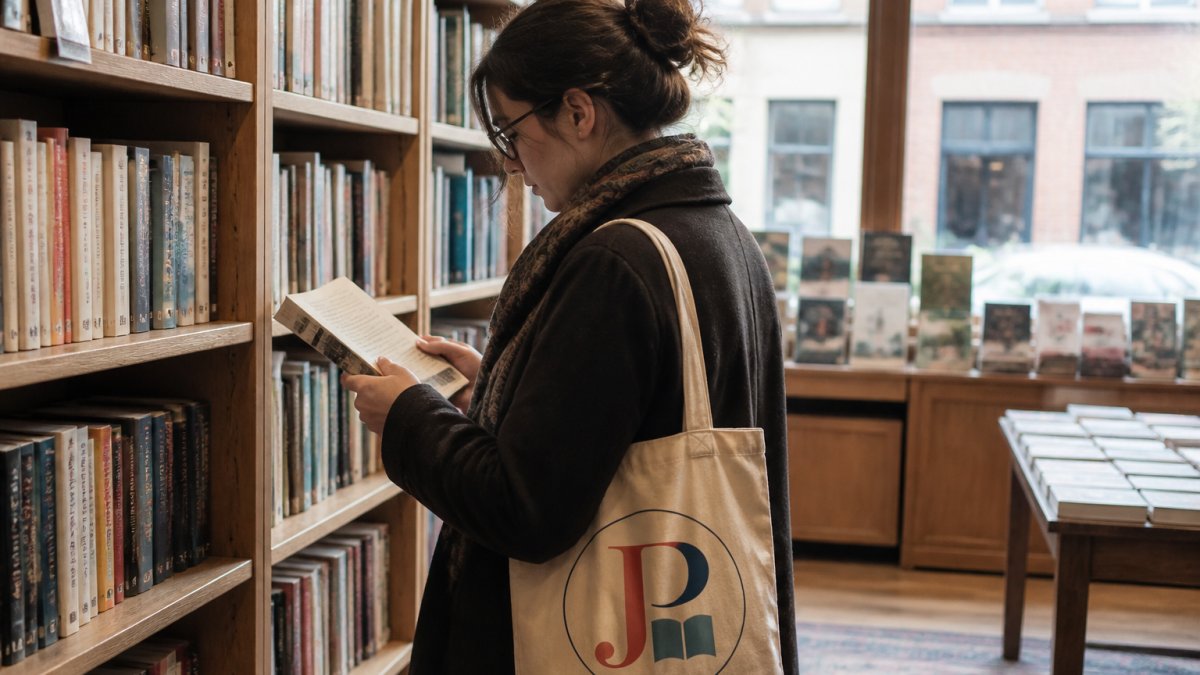
Finding independent authors takes a little intention, because indie books rarely get the front table at a chain store. The trade-off is worth it: a handful of good sources will keep you supplied for years, and a simple evaluation routine will save you from the occasional dud.
Where to Look First
Start with sources that already filter for quality:
- Independent bookstores. Staff who hand-sell indie titles know their lists cold and will tell you which presses they trust.
- Genre awards with small press categories. Awards with small press categories can be a curated starting point.
- Book clubs that read outside the bestseller list. A group that deliberately reads indie fiction does the discovery work for you.
- Author websites. Presses often link their catalog from author pages, and a writer's site usually lists every title in a series in order.
- Acknowledgments pages. Indie authors thank their editors and press by name, which tells you who is doing real editorial work.
How to Evaluate a Press Before You Buy
This is the part most guides skip. You can judge an independent press's editorial standards in about five minutes with a few signals:
- Check the catalog, not just the book. A press with a consistent, curated list is doing editorial work. A press that publishes anything submitted is not.
- Look for a named editor. If the copyright page or the press website names an acquiring editor or editorial director, that is a strong signal of a real editorial process.
- Read the copyright page. A press name plus an editor means a small press title. The author's own name as publisher means self-published. Neither is automatically better, but the signals differ.
- Scan reviews for specifics. Detailed reviews that mention pacing, structure, or character arcs are more useful than star averages. A wall of five-star reviews with no text is a weaker signal than a handful of thoughtful ones.
- Read the first ten pages. Voice shows up fast. Awkward prose on page one rarely improves by page fifty.
Sample Before You Commit
Most indie presses and authors offer a free sample chapter or a free ebook as an entry point. Use them. A sample tells you more about whether you will enjoy a book than any blurb or cover.
One more thing. Buying indie fiction directly from a publisher's store often supports the author more than a marketplace sale does, because the press keeps a larger share. That is not a guilt trip, just useful information when you are deciding where to click.
Quality Control and Reader Expectations
Quality in independent publishing varies more than in traditional publishing, and readers should expect that going in. Some indie presses run rigorous editing. Others do not. The variance is the honest trade-off.
This is where a lot of indie coverage gets lazy. It either pretends every indie book is polished or writes off the whole category as rough.
Last Song of the Spire – Epic Fantasy →
Neither is true.
A few expectations worth setting:
- Editing quality tracks the press, not the label. A press with a named editor usually delivers cleaner text.
- Cover design is a weak signal. Some excellent indie novels have plain covers.
- First pages tell you a lot. Awkward prose on page one rarely improves by page fifty.
- Reviews from real readers help. Look for specific, detailed reviews over star averages.
The 2022 Cogent Social Sciences research on indie publishing collaborations is blunt about this: independent publishing does not guarantee market access or reader reach. A book can be good and still go unnoticed.
For readers, that cuts both ways. You will hit a dud now and then. You will also find books no one else has told you about.
Genre Fiction from Independent Presses: What to Try First
Genre fiction is where independent publishing shines brightest, because genre readers are loyal, specific, and willing to follow a series to the end. Thrillers, fantasy, romance, and horror all have thriving indie ecosystems.
Adult fiction held up print sales in the first half of 2026, even as overall print sales dipped 0.3%, per Publishers Weekly on print book sales in the first half of 2026. Genre readers are carrying a lot of that.
If you are new to indie fiction, start where your taste already lives:
- Psychological and domestic thrillers. Look for unreliable narrators, family secrets, and slow-burn tension. Paige Brooks writes in this space, with titles like The Stepmother and She Told Me to Lie.
- Epic and dark fantasy. Look for immersive worldbuilding and completed series. Jasper Stone's Weeping Spire Trilogy follows Inquisitor Cora Veylan through a fallen kingdom and a Church built on buried truths.
- Literary and experimental fiction. Small presses are the main home for this work.
- Romance and horror. Both have deep indie catalogs and active reader communities.
Start with book one of a completed series. That way, if you love it, the rest is already waiting.
Reader Resources
Jove Publishing is a family-owned independent publisher and online bookstore, and we keep a few free entry points open for readers who want to try indie fiction without committing first.
- FREE Psychological Thriller by Paige Brooks for readers who like domestic suspense and unreliable narrators.
- FREE Epic Fantasy Novel by Jasper Stone for readers who want immersive worldbuilding and high stakes.
- FREE Printable Activity Sampler by Misty Clover Press for screen-free downtime between novels.
Readers can also browse the full catalog at the Jove Publishing bookstore, including the complete Weeping Spire Trilogy bundle in paperback.

Conclusion: Read Wider, Read Braver
The real challenge with independent publisher fiction is not finding it. It is deciding to look somewhere other than the usual shelf.
Readers who make that shift get books the big houses passed on, series that actually finish, and a direct line to the people who made them. That is a different kind of reading life.
At Jove Publishing, we publish psychological thrillers from Paige Brooks, epic fantasy from Jasper Stone, and activity books from Misty Clover Press, all in paperback and all available through our online store. Our catalog is curated by hand, not by algorithm.
Start with a free book from one of our authors, or browse the store and find your next read.
Frequently Asked Questions
What is an independent publisher?
An independent publisher is a publishing company that is not owned by one of the large corporate publishing groups. It acquires manuscripts, edits them, designs covers, and handles production and distribution, much like a traditional house, but operates on its own. Independent publisher fiction often reflects the tastes of a smaller editorial team, which can mean more room for experimental writing, genre blends, and voices that larger houses consider a harder sell.
What is the difference between an independent publisher and a self-published author?
A self-published author releases their own work and controls every step, often without a separate editorial team. An independent publisher, by contrast, selects and invests in manuscripts from authors, then provides editing, cover design, and production support. That distinction matters to readers because independent publisher fiction passes through an acquisition and editing process, while self-published work varies widely depending on how much outside help the author chooses to hire.
Do independent publishers publish good fiction?
Many do, and the range is broad. Smaller presses often champion literary fiction, poetry, and experimental writing that larger houses pass over, and independent publishing can also move faster. The honest caveat is that independent publishing does not guarantee quality or reach.
Where can readers find fiction from independent publishers?
Start with an independent bookstore's staff picks, library new-fiction shelves, and genre-specific book clubs where members trade recommendations. Publisher newsletters and author websites are useful too, since smaller presses rely on direct relationships with readers. If you enjoy dark fantasy, for example, Jasper Stone's Weeping Spire Trilogy from Jove Publishing is a good entry point. A free epic fantasy novel is also available to sample the style before buying.