





Table of Contents
- How Pacing Creates Suspense in a Thriller
- Signs of a Well-Paced Thriller You Can Spot in Ten Pages
- Fast-Paced Thriller Books and What Makes Them Feel Fast
- Slow-Burn Thriller Pacing Versus a Story That Simply Drags
- Run a Scene-by-Scene Pacing Audit on Your Next Read
- Reader Resources
- Frequently Asked Questions
Last Updated: November 14, 2026
How Pacing Creates Suspense in a Thriller
Learning how to tell if a thriller has good pacing starts with one idea: pacing is the speed at which a story hands out information and pressure.
That engine is the tension-release cycle. Pressure builds, the reader holds their breath, then the story gives a small release before building again. A calm scene is not a pause in the suspense.
The Tension-Release Cycle Readers Feel
A well-paced thriller alternates between tension and release. A tense scene might be a quiet dinner where every line of dialogue hides a threat. The release might be a short chapter where the narrator catches their breath.
Readers feel this in their body. Racing pulse, then a sigh. That rhythm is the clearest sign of good pacing.
Signs of a Well-Paced Thriller You Can Spot in Ten Pages
The fastest test is the ten-page check. Read the first ten pages in one sitting, then score what you noticed. The point is not to judge the prose but whether the story is already handing out change and pressure.

Ask three questions: Did something change? Did a question form in your mind? Did you want to turn the page? If all three answers are yes, the book is likely well paced.
A Practical Diagnostic Checklist
Use this checklist on any thriller before you commit. Each line describes a signal you can point to on the page, not a feeling.
- Something changes on page one, not page fifty. A death, a lie, a return, a discovery: the status quo has to crack early.
- A clear question pulls you forward by page three. You should be able to say out loud what you want answered.
- Chapters end on a hook, not a shrug. The last line should make the next page feel necessary.
- Dialogue does more work than description. Conversations carry threat, evasion, or information the narrator does not want to share.
- Stakes rise with each chapter, never stay level. Something the narrator can lose gets closer to being lost.
Score each line yes or no. Six or seven yes answers is a strong signal.
Watch out: a thriller can pass every line and still lose you later, because the ten-page test measures the opening, not the middle.
What Each Signal Actually Tells You
- Change on page one tests whether the writer trusts the reader. A story that opens on routine is often saving its real start for later.
- A question by page three tests propulsion. Without a question, there is nothing for the reader to chase.
- Chapter-end hooks test structural pacing. A weak last line is the most common reason a thriller is easy to put down.
- Dialogue over description tests information control. Thrillers move when characters withhold and reveal, not when the narrator explains.
- Rising stakes test escalation. If the danger is the same in chapter two and chapter eight, the middle will sag.
- Pressure in quiet scenes tests the tension-release cycle. Calm beats should still carry weight.
For readers who want to test this on a standalone thriller, our guide to choosing an independent thriller book walks through what to check first.
Fast-Paced Thriller Books and What Makes Them Feel Fast
Fast-paced thriller books share a few habits. Short chapters. Sharp scene transitions. Cliffhangers that land on the last line.
Speed does not come from car chases. It comes from momentum: every scene pushes the next one forward. A fast book rarely repeats itself.
Readers who want examples of this style can browse our list of psychological thrillers with plot twists and compare how quickly each one hooks them.
Slow-Burn Thriller Pacing Versus a Story That Simply Drags
Slow-burn thriller pacing is deliberate. Drag is accidental. The difference is whether the quiet chapters are still doing work.
A slow-burn thriller uses calm moments to build dread. Every scene plants something: a lie, a memory, a red herring. A dragging story fills pages without changing anything.
Ask one question when a chapter feels slow: did the stakes move? Readers sorting the two apart can check which thriller tropes hold up in practice to judge more fairly.
Run a Scene-by-Scene Pacing Audit on Your Next Read
A scene-by-scene pacing audit is the deepest test, and you can run it on any book. Most pacing advice tells writers how to build speed.
A scene is a unit of change, not a chapter. One chapter may hold two scenes, or one scene may stretch across a chapter break. Mark the scene boundaries first, then fill in a row for each one.
The Pacing Audit Worksheet
For every scene, note five things in a simple table or notebook:
- Goal: What does the viewpoint character want in this scene?
- Conflict: What stands in the way, and who or what pushes back?
- New information: What does the reader learn that they did not know before?
- Stakes: What can be lost, and is it more than last scene?
- Momentum: Did this scene push the next one forward, or could it be cut without damage?
A scene that scores well on all five is doing work. A scene with a goal and conflict but no new information may still be atmospheric. A scene with no goal at all is usually where drag begins.
Reading the Results
- Three or more scenes in a row with no new information means the middle is sagging. The story is marking time.
- Every scene ending at peak intensity means the reader will tire out. The best thrillers vary the dial and let pressure release before squeezing again.
- Stakes that never rise across ten scenes means escalation has stalled, even if events are busy.
- Scenes with no goal are the clearest sign of accidental drag. A quiet scene can still have a goal, even if the goal is only to get through dinner without a fight.
- Scenes that could be cut with no damage are the ones a sharp editor would flag first.
Watch out: a scene can feel slow and still be essential, especially in psychological suspense where dread builds through small observations. Judge the pattern across several scenes, not one quiet chapter.
A Worked Example
Imagine a thriller where the narrator attends a family dinner. The goal is to find out whether her sister knows about the letter. The conflict is the sister's evasiveness and a brother-in-law who keeps changing the subject. The new information is that the sister lied about where she was last week. The stakes rise because the narrator now suspects the lie is connected to the missing money.
That scene is quiet on the surface but scores well on all five lines. Now compare a scene where the narrator drives to the store and thinks about the letter. There is no goal beyond errands, no conflict, no new information, and no change in stakes. It may contain a nice sentence or two, but it is the kind of scene that makes a thriller feel slower than it is.
Common Pacing Problems and the Fixes Writers Use
| Pacing Problem | What It Feels Like | The Fix Writers Use |
|---|---|---|
| Flat middle | Nothing changes for chapters | Raise the stakes or cut scenes |
| Constant intensity | Reader goes numb | Add calm beats and release |
| Slow opening | Story starts too late | Open on change, not setup |
| Weak chapter ends | Easy to put down | End on a hook or cliffhanger |
| Repetitive scenes | Reader skims ahead | Merge scenes or add new information |
Readers who want a stack to practice on can browse Paige Brooks psychological thrillers, all standalone novels with complete endings and no reading order to worry about.
Reader Resources
- FREE Psychological Thriller by Paige Brooks
- Visit Paige Brooks
- Free Sampler
- Browse all our books
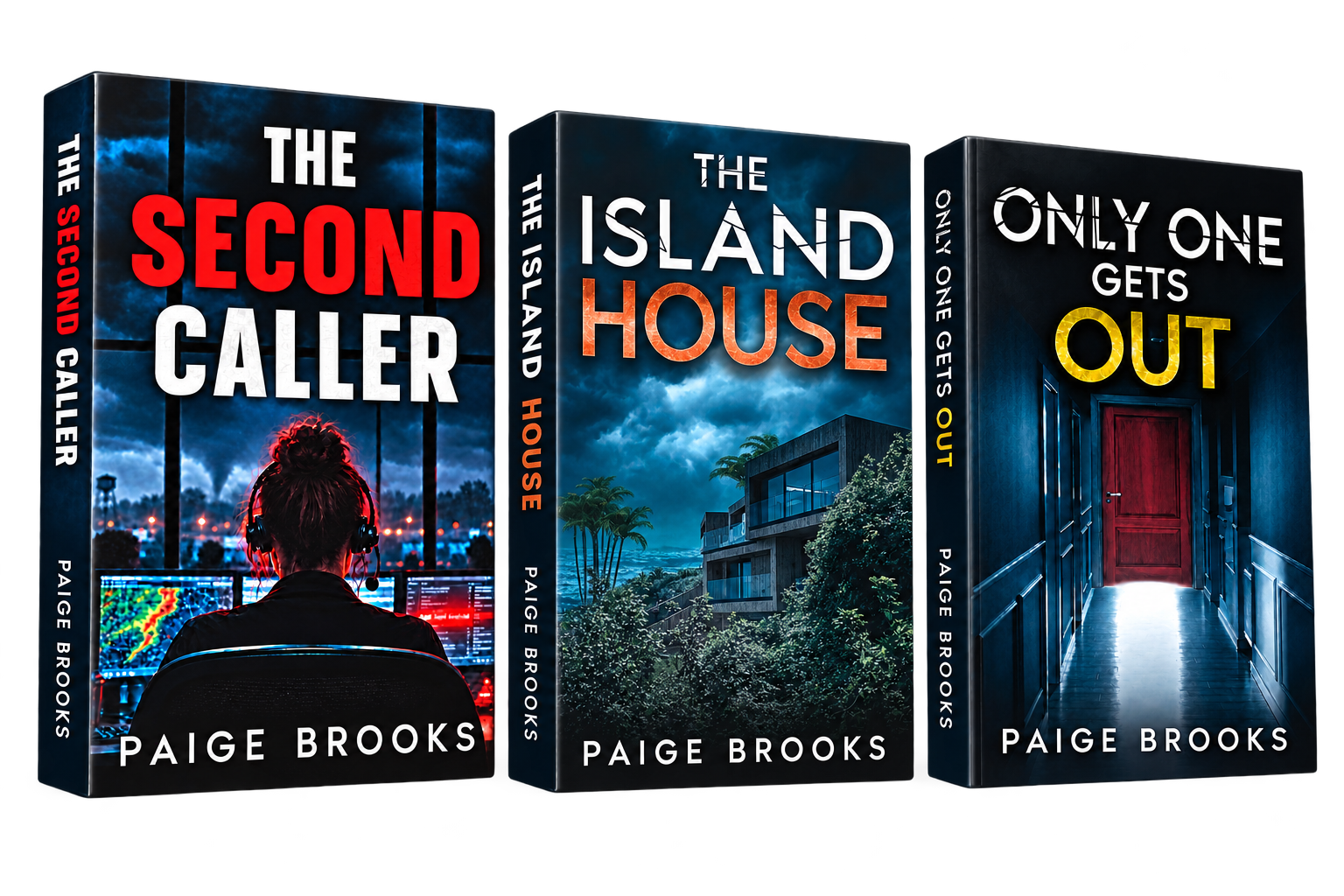
Judging pacing takes practice, and the best way to learn is to read widely. At Jove Publishing, we publish standalone psychological thrillers with complete endings, including the The Second Caller 3 Book Bundle at $40.77, regularly $47.97, you save $7.20. Allow 1 to 2 weeks for delivery. Find your next page-turner.
Frequently Asked Questions
How can you tell if a thriller has good pacing?
Read the first two or three chapters and watch what changes. In a well-paced thriller, each chapter moves at least one thing forward: a new clue, a shift in a relationship, a decision with consequences. If you can skip a chapter and lose nothing, the pacing is soft. Good thriller pacing also varies its speed, pairing tense scenes with quieter ones so the tension has somewhere to build from.
How do you know if a thriller's pacing is too fast?
Pacing is too fast when events pile up faster than you can care about them. Watch for twists that arrive before you understand the stakes, characters who react to a big reveal in a single line, and chapters that end on a shock but never sit with the fallout. Fast pacing should still leave room for consequence. If you finish a chapter unsure why anything mattered, the book is rushing.
Can a thriller have slow scenes and still be well paced?
Yes. Slow-burn thriller pacing works when the quiet scenes carry tension of their own, such as a conversation where someone is lying or a domestic scene with an undercurrent of threat. The test is whether the slow section changes something. A calm chapter that deepens suspicion or plants a clue earns its place. A calm chapter that only repeats what you already know is drag.
How can readers tell whether a thriller's twists are well timed?
A well-timed twist lands after you have been given enough to suspect something, but before you have solved it. If the reveal arrives too early, the rest of the book feels flat. If it arrives too late, you have already guessed and the moment loses its punch. Reread the chapter before a big twist: if the clues were there and you missed them, the timing was right.
